
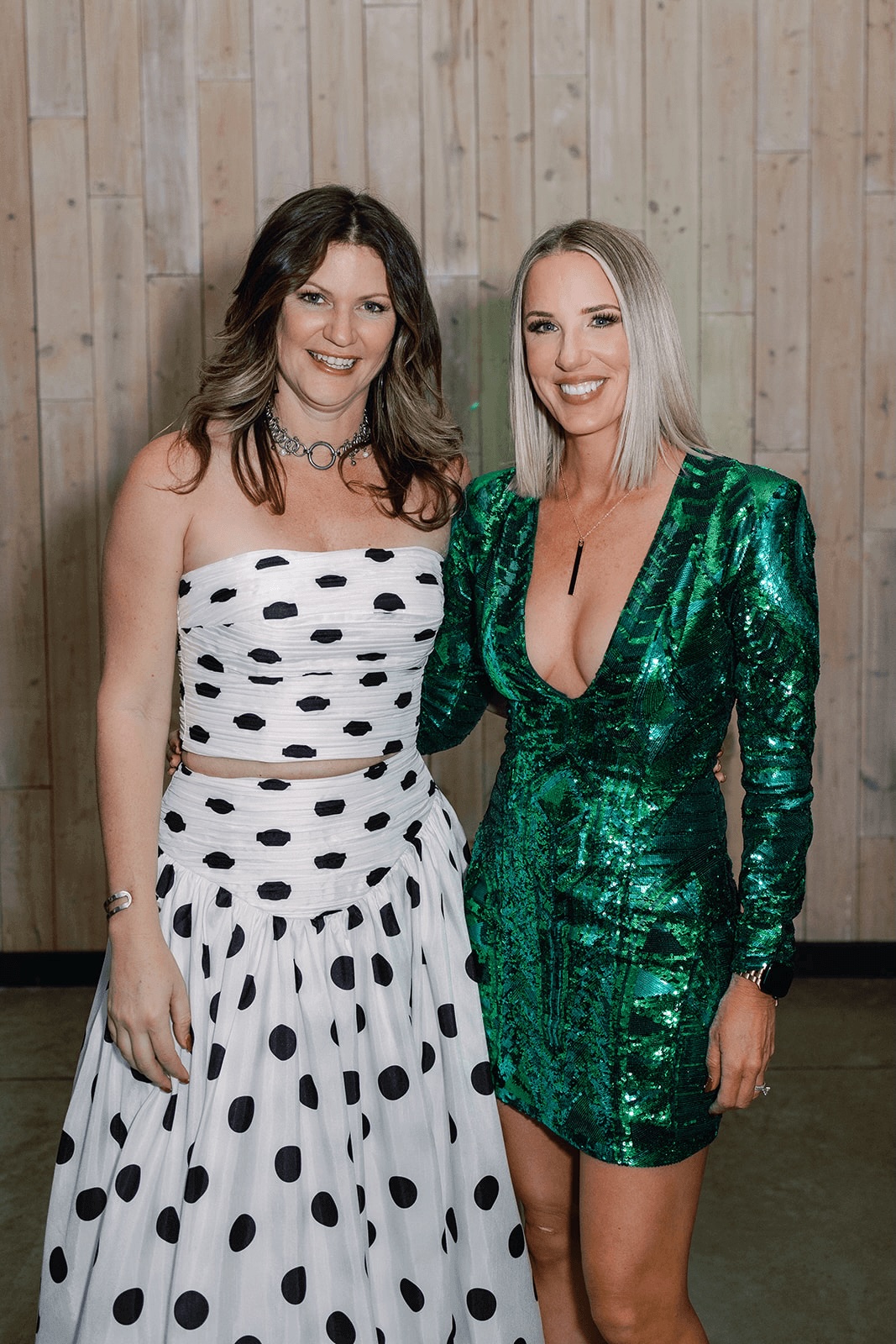
The 17-year journey from front desk to CEO.
Seventeen years ago, Hallie Spurlin was answering phones at the front desk of Urban Betty.
We were in our original upstairs location on 38th Street in Austin. I think we had maybe eight or ten chairs at the time. We were still small, still figuring things out, and I definitely was not sitting there thinking, “This woman is going to be the CEO of my company someday.”
But that is exactly what happened.
In August 2026, Hallie officially became CEO of Urban Betty, a three-location salon company with around 90 employees. Her first month as CEO also happened to be the best-performing month in Urban Betty’s history.
Revenue came in at $617,000, up 15.8% from the month before. We had also had a 45.4% gross margin.
I don’t think that timing was an accident. But I also don’t want anyone reading this to think I woke up one day, handed Hallie the keys, and rode off into the sunset. This took years.
She Started at the Front Desk

Hallie started with Urban Betty in 2009. She had a journalism degree from UT, but more importantly, at least in my opinion, she came from the service industry. She had been a bartender.
I freaking love hiring people who have worked in restaurants or bars. If you can bartend, you already understand customers, multitasking, pressure, personalities, urgency, and how to keep moving when ten different people need something from you at once.
Salon front desks are not that different.
Hallie was great at it. She was also incredibly nice. So nice, actually, that when she eventually moved into management, I remember thinking, “Oh my God. These people are going to run right over her.”
Boy, did she prove me wrong.
At one point early on, Hallie actually left Urban Betty for a couple of months. She took another job and quickly realized she didn’t like it, so she came back. She told me she thought of Urban Betty as her “fun job.”
That always stuck with me. When someone genuinely enjoys being at your company, that matters.
I Had to Get Myself Out From Behind the Chair First
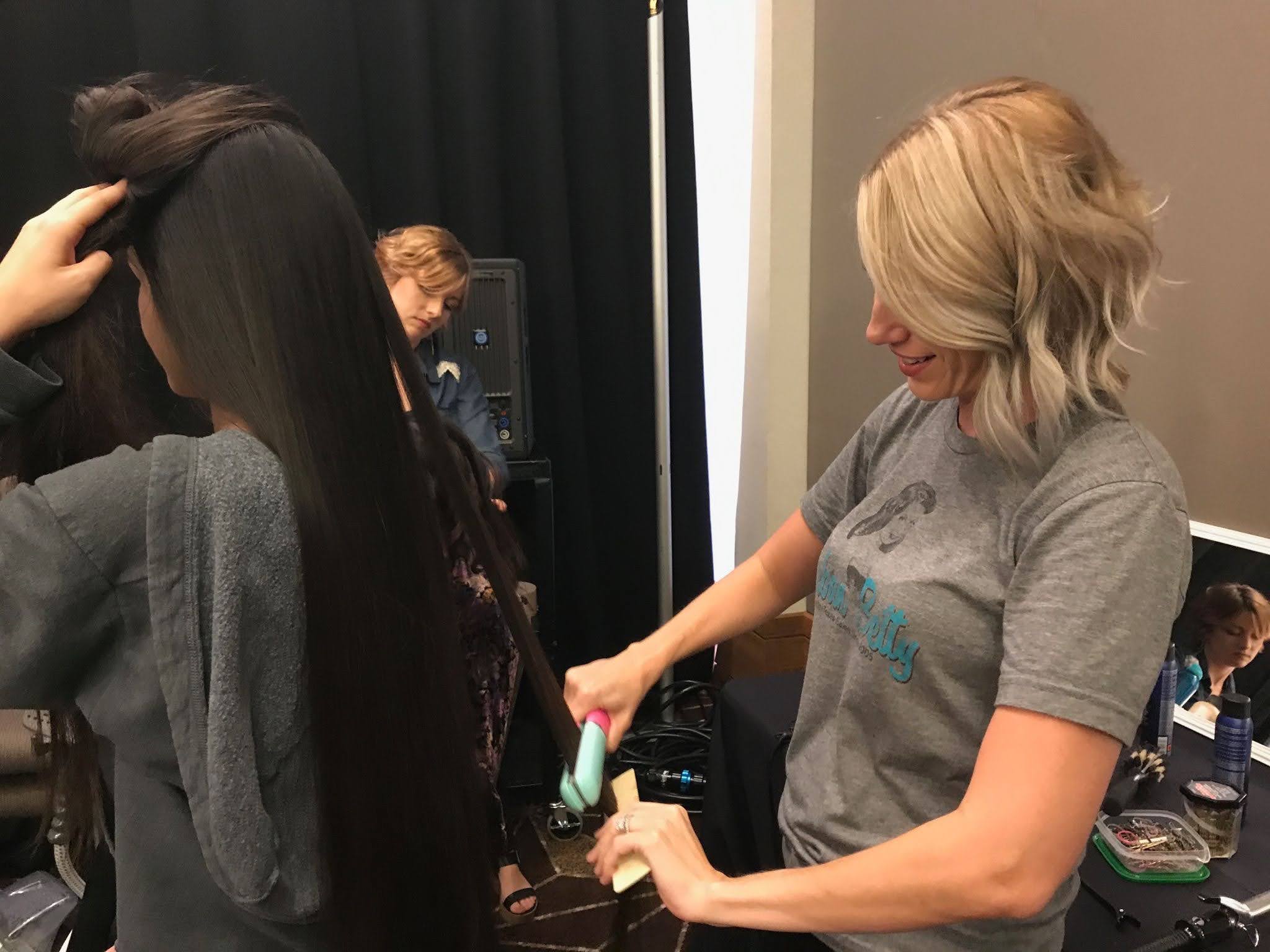
Here is my hot take for salon owners. If you cannot get yourself out from behind the chair, I don’t know how you are ever going to have a manager truly run the business, let alone a CEO.
Now, if doing hair is your absolute favorite thing in the world and you want to do it forever, great. There is nothing wrong with that. But for me personally, I do not believe I could have executed my full vision for Urban Betty while also taking clients all day.
I just couldn’t do both at 100%.
And getting out from behind the chair was not easy. In 2014, Urban Betty was in serious trouble. At one point I was negative $8,000 in my checking account, and we were close enough to going out of business that I finally realized something had to fundamentally change.
I hired a business coach through Summit Salon Systems, and we restructured the company. Instead of paying everyone a flat 50% commission, we implemented a level system. Newer team members started at around 40%, with commission increasing as they progressed through our highest levels and trainer positions.
That change gave the business room to become profitable and gave our stylists a clear career path.
Then I very slowly began removing myself from behind the chair. I didn’t just quit doing hair one day. I shaved off about one day a week each year until I was down to roughly two and a half days.
In 2017, three years after beginning that restructuring, I retired from doing hair. It was methodical. It took patience. But it changed everything.
You Cannot Replace Yourself With One Person

This is probably one of the biggest things I want salon owners to understand. I did not replace myself with Hallie. I built a structure that allowed Hallie to lead.
Those are two very different things.
Today, our 38th Street location has its own dedicated manager and assistant manager. South Congress has a manager. Round Rock has a manager. We have an inventory manager, a marketing manager, outside HR support, and a fractional CFO.
For years, our leadership team has also met every single week to go through KPIs, numbers, people, problems, and priorities.
Hallie cannot personally manage 90 people any more than I can. She needs leaders underneath her who are empowered to do their jobs.
Those leaders now handle so many of the things that once landed on me, including payroll, one-on-ones, culture, accountability, daily operations, team issues, and the hundreds of tiny decisions that happen inside a salon company every week.
That infrastructure is what gave me the ability to step away.
Hallie’s Promotion to CEO Took 17 Years

Hallie’s career path at Urban Betty was incredibly slow and deliberate. She started at the front desk and stayed there for roughly the first couple of years before becoming an assistant manager.
In 2018, she became a shareholder and received 2% sweat equity in the company. In 2020, she became our general manager. In 2024, she became VP of Operations and CFO.
Then, in August 2026, she became CEO.
She now owns 7% of Urban Betty. Her original 2% was sweat equity, and she later purchased another 5%.
None of these promotions happened because I liked her or because she had been around a long time. She proved herself over and over again.
Why I Promoted From Within

I also knew I wanted someone who understood our culture from the inside out.
When you run a business full of creatives, they need to trust the person who is leading them. You cannot just drop someone into the top job and expect everyone to automatically have that connection.
Connection is a fundamental part of Urban Betty. We know how to connect with each other, and we know how to connect with our guests. I truly believe that is one of the reasons we have been so successful.
Hallie already had that trust. She had spent years building relationships with the team, understanding the culture, learning the business, and growing alongside it.
For us, that mattered more than finding some experienced CEO from the outside.
The Moment I Knew She Could Run the Company

For me, the biggest turning point happened in 2021.
My husband and I got three days’ notice that we were bringing our son, Isaac, home. Suddenly I was becoming a mom, taking three months off, and handing the business over.
Hallie stepped in and did a brilliant job. The company did better than ever.
Looking back, I wish I had handed more over to her sooner.
Sometimes as founders we think our company needs us because we have always been the one carrying it. Then life forces us to get out of the way, and we discover that someone else is not only capable of carrying it, they may be able to carry parts of it better than we can.
Profit Was One of My Biggest Green Flags
Another huge turning point in our relationship happened during the pandemic.
I read Profit First, and the book completely changed the way I thought about the finances of the business. I introduced Hallie to the system, she read the book, learned the method, and then helped implement it.
Improving profitability became one of her missions, and that was a huge green flag for me.
A lot of employees come to work, put their heads down, do a good job, get paid, and go home. There is nothing wrong with that. But when you find somebody who genuinely cares whether your company is profitable, pay attention.
Hallie understood that profitability protects jobs. It lets us invest in the company, pay people well, build cash reserves, and create stability.
Because she owns equity, profitability benefits her too. That alignment matters.
If You Want a CEO, You Have to Pay for a CEO

I also think salon owners need to be realistic about what this kind of freedom costs.
You cannot give somebody the responsibility of running a multimillion-dollar company and then pay them like an entry-level salon manager. Hallie earns a six-figure salary because that is what someone carrying this level of responsibility should make.
She also receives dividends because she owns equity in the company.
If you want somebody incredible to stay, grow, think like an owner, carry enormous responsibility, and protect the company you spent your life building, they need to share in the success.
I gave Hallie equity because she earned it. I also gave her equity because I wanted to keep her. She is freaking amazing.
Giving Up Control Did Not Hit Me Until Afterward
People have asked whether it was emotionally difficult to hand over control. For me, the emotional part actually hit afterward.
I think I am one of those people who prepares myself to make a big change and charges through it. Then my brain and body process what just happened later.
One of the hardest lessons has been learning the difference between “This is wrong” and “This just isn’t how Chelle would have done it.”
Nobody is my clone. Every time you empower someone, they are going to do things differently.
I have learned to let things play out. I let people make decisions, and I let people make mistakes. I watch what happens, and if it doesn’t work, we reconvene and talk about what we could do differently.
I do not believe in telling people, “Do it my way or hit the highway.” Sometimes when I give people the freedom to figure something out themselves, they come up with a better way than mine.
That is the whole point of hiring smart people.
Her First Month Became Our Best Month Ever

The beginning of 2026 brought a lot of changes to Urban Betty. We changed salon software, implemented Vish for color management, brought in professional HR support, hired a fractional CFO, and finally implemented a price increase after going two years without one.
There were a lot of systems coming together at the same time.
Then Hallie officially became CEO, and August became the best-performing month in the history of the company.
Could you say there were practical reasons for that? Absolutely. But I also believe very strongly in energy.
There is something that happens when you truly empower other people to carry the company with you. For years, I felt like everything ultimately sat on my shoulders. Once I stopped believing I had to personally hold all of it, things started opening up.
Look at leaders of huge companies. The CEO is not standing on the floor trying to personally perform every role in the organization. That would be impossible.
The job becomes finding great people, building systems, creating accountability, communicating the vision, and then trusting those people to execute.
Sometimes the person who founded the company is not even the best person to run its day-to-day operations forever. I think being able to admit that is a sign of success, not failure.
If You Are Still Behind the Chair and Exhausted, Start Here
If you are reading this while doing clients five days a week, approving every decision, answering every text, handling every upset guest, checking payroll, managing inventory, and thinking, “There is absolutely no way this place could run without me,” I understand.
It probably cannot run without you today. That doesn’t mean it has to stay that way.
It will take time, money, systems, and developing leaders. It will also take making mistakes, giving up control, and probably having several uncomfortable moments where you desperately want to jump back in and fix everything yourself.
But think about the energy you already have.
If you can show up every day and do hair, you can take some of that same energy and start showing up every day to change your business. Build one system. Train one leader. Delegate one responsibility. Look at your numbers. Create a career path.
Start making yourself a little less necessary, and then keep doing it.
Seventeen years ago, Hallie was sitting at my front desk answering phones. Today, she is the CEO of Urban Betty, and I get to be the founder.
That might be one of the things I am most proud of building.
At some point, I stopped chasing every dollar, every decision, and every problem myself. And I really believe that when you stop chasing the dollar, the dollar starts chasing you.