
One of the hardest things I’ve ever had to do as a business owner was make a decision that I knew some of my employees weren’t going to like. And let me tell you, that decision did NOT go over well with everyone.
In 2014, Urban Betty was operating with a straight 50% commission structure for stylists. It was what we’d been doing, it was familiar, and it was pretty standard in the salon industry. The problem was that I had built a business where I was paying everyone else but barely keeping the doors open.
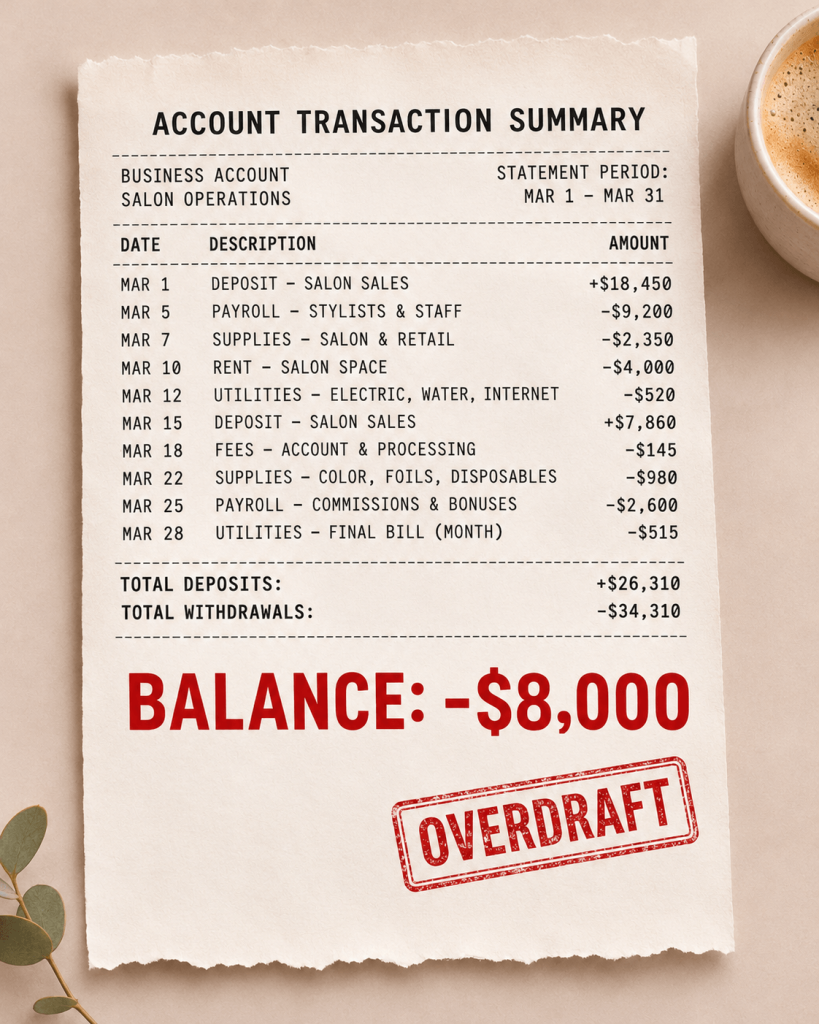
I was getting overdraft notifications, struggling to pay bills, and wondering how the hell I could be bringing in all this revenue and still have no money. At one point, my business checking account was negative $8,000. NEGATIVE $8,000! And I was the owner of what everyone on the outside thought was a successful salon.
Something had to change, and unfortunately, the change I needed to make wasn’t going to make everyone happy. Looking back, that decision was one of the biggest turning points in Urban Betty’s history. It taught me that sometimes doing what’s right for your business means making decisions your employees don’t understand or agree with. But if I hadn’t made that decision, I genuinely don’t believe Urban Betty would be here today.
I Was Making Money, but I Was Still Broke
When I opened Urban Betty in 2005, I didn’t know nearly as much about running a business as I thought I did. I knew how to do hair, I knew how to build relationships with guests, and I knew how to create an environment where people wanted to work. But understanding profit margins, labor costs, and what it actually took to operate a financially healthy salon? That was a whole different story.
I started out with a booth rental model because, quite frankly, I didn’t want to be anyone’s boss. I’ve talked before about how much of a people pleaser I was in those early years. I wanted everyone to like me, and I thought giving people freedom and charging affordable rent would make everyone happy. Eventually, I realized that model wasn’t giving me the kind of business or culture I wanted to build, so I transitioned to an employee-based commission salon.
But I took that same people-pleasing mentality right into the new business model. I was paying a straight 50% commission because that’s what I thought I was supposed to pay. I wasn’t asking whether the business could actually afford it. I was thinking about keeping my stylists happy, staying competitive, and making sure nobody wanted to leave.
Here’s what I didn’t understand at the time. Just because your salon is busy and bringing in revenue doesn’t mean you’re making money. There are so many expenses involved in running a business, especially one with employees. You’ve got payroll taxes, rent, utilities, supplies, insurance, education, equipment, maintenance, marketing, and approximately a million other things that seem to pop up out of nowhere.
And when you’re giving away too much of your revenue before you’ve paid those expenses, there’s not much left. Sometimes there’s nothing left at all. I was learning that lesson the hard way.
The Moment I Realized Something Had to Change
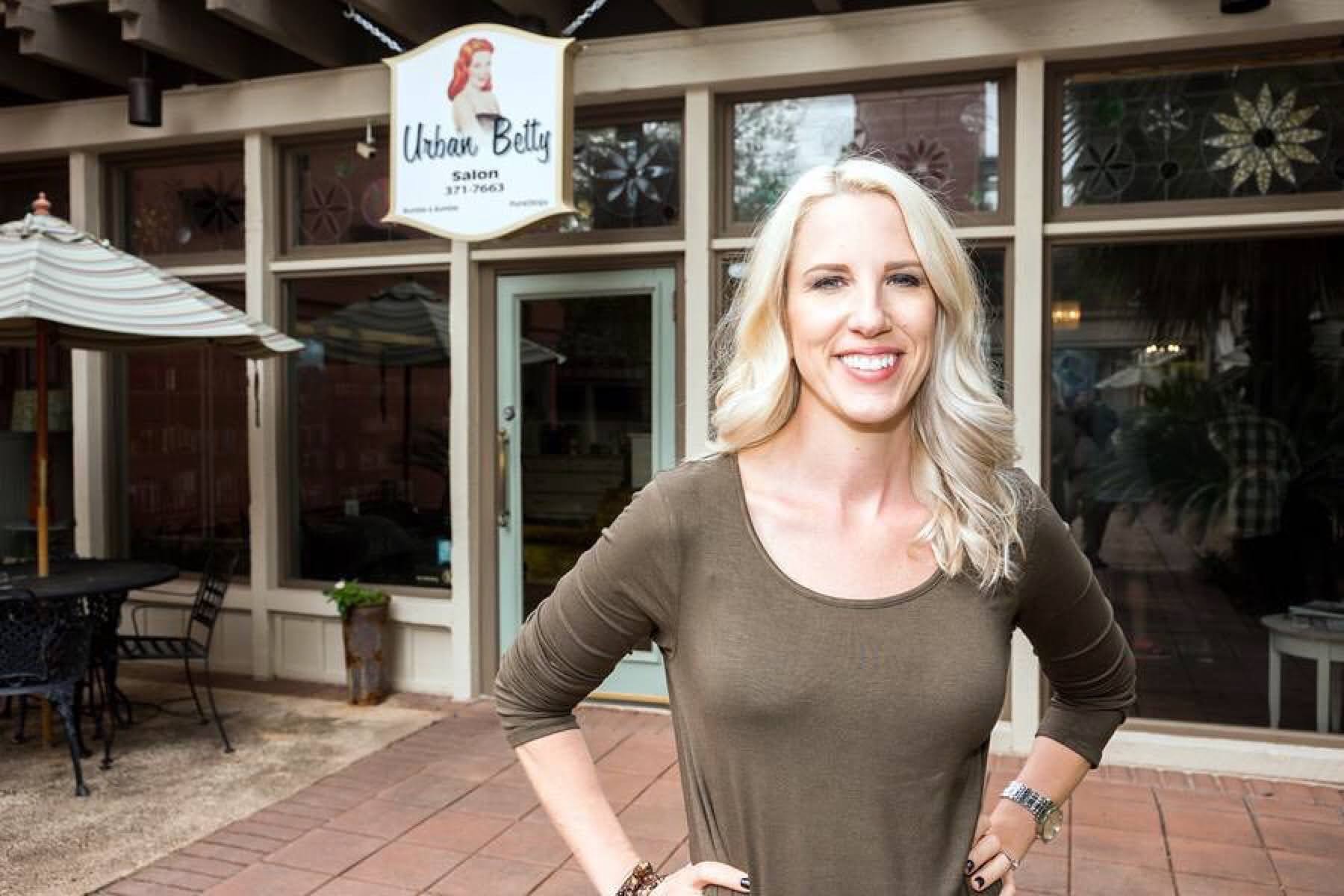
I’ll never forget how stressful it felt to be the owner of a growing salon and constantly worry about money. From the outside, things looked great. We had stylists, guests coming through the doors, and a business that seemed to be moving in the right direction. But behind the scenes, I was stressed about whether there would be enough money in the account to cover everything.
When your business checking account is negative $8,000, you have a problem that working a few more hours behind the chair isn’t going to fix. You have a business model problem. And that’s a really hard thing to admit when you’ve put your heart, soul, and entire identity into building something.
I think a lot of salon owners find themselves in this position because we’re taught how to make money doing hair, but we’re not necessarily taught how to run a profitable company. We think that if we can just get busier, hire another stylist, or bring in a few more guests, eventually everything will work itself out. But if the financial structure of your business is broken, growing can actually make the problem bigger.
I finally reached a point where I realized I couldn’t keep doing what I’d always done and expect a different result. I needed help, and I needed someone who understood the salon industry and could show me what a financially sustainable business was supposed to look like.
That’s when I hired a business coach and started working with Summit Salon Systems in 2014. And holy shit, did that change everything.
The Decision Nobody Wanted Me to Make
One of the biggest changes we made was implementing the Summit Salon level system. Instead of continuing to hire every new stylist at a straight 50% commission, we created a structured compensation system with different levels, goals, and opportunities for advancement. New stylists coming into Urban Betty would start at the appropriate level, with commission beginning at 40% and the opportunity to grow as they progressed through the system.
Now, here’s something I want to make very clear. We did NOT reduce the compensation of our existing employees. Everyone who was already working at Urban Betty kept their existing compensation arrangement. The new level system applied to people we hired moving forward, and we were completely transparent about the structure, expectations, and opportunities before they joined our team.
But even though we weren’t taking anything away from our current employees, the decision still represented a major shift in how Urban Betty operated. We were creating an entirely new way of hiring, training, evaluating, and developing stylists. We were moving away from doing things simply because that’s how they’d always been done and toward building a business with real financial structure and long-term career opportunities.
And not everyone was excited about that direction.
What I needed my team to understand was that we couldn’t keep operating the way we had been. This wasn’t about wanting to pay people less. It was about creating a business that could afford to employ people, invest in their education, provide benefits, and give them opportunities to build successful careers.
The hard part was that my employees couldn’t see everything I was seeing. They were familiar with how the business had always operated, while I was looking at the financial survival of the entire company. And those are two very different perspectives.
I Lost People I Loved
When we made the transition, not everyone stayed. We lost around five or six employees during that period, and some of those relationships were incredibly important to me. These weren’t just names on a payroll report. These were people I’d worked alongside, laughed with, celebrated with, and spent a huge part of my life around.
And as someone who had spent years trying to make everyone happy, losing people while making major changes to the business was devastating. I questioned myself. I worried about what other employees were thinking. I worried about what the people who left were saying. And of course, I worried about whether we’d lose guests or whether the business could survive with fewer stylists.
But here’s what I had to remind myself. We were already struggling to survive under the old system. Keeping everything the same just because people were comfortable wasn’t actually protecting anyone.
That was one of the first times I truly understood the difference between being someone’s friend and being responsible for a business. I could love and appreciate my employees while still recognizing that the company needed to change. I could be sad that someone chose to leave while still believing I was making the right decision. And I could understand why people weren’t excited about the changes without reversing a decision that was necessary for the future of Urban Betty.
It took me a long time to get comfortable with that.
Sometimes You Have to Be the Bad Guy to Save the Business
I think this is where so many business owners get stuck. We convince ourselves that if we make a decision our employees don’t like, we’re somehow failing them as leaders. We avoid difficult conversations, make exceptions, and hold on to systems that aren’t working because we’re afraid of upsetting people.
But think about what happens when you avoid making those decisions for too long. What happens when your salon can’t make payroll? What happens when you can’t afford to maintain your equipment, invest in education, or offer competitive benefits? What happens when the business you’ve worked so hard to build has to close its doors? Then everyone loses.
That’s what I had to come to terms with. I wasn’t just responsible for making my employees happy in the moment. I was responsible for making sure there was a healthy company for them to work for in the future. And sometimes those two responsibilities don’t line up perfectly.
I’ve said before that growing a business is a little like a snake shedding its skin. You can’t keep growing if you’re holding on to something that no longer fits. Sometimes you lose people, systems, or ways of doing things that once felt comfortable because you’re growing into something bigger.
That doesn’t make the process easy, but it doesn’t make it wrong either.
What Happened After We Made the Change

Here’s the part of the story that I wish I could go back and show my younger self.
After we implemented the level system and started putting better business systems in place, our financial situation began improving. I went from having a business account that was negative $8,000 to eventually seeing more than $50,000 in the bank.
I cannot adequately explain what that felt like after spending so much time stressed about money. For the first time, I was beginning to understand what it meant to run a business that was actually making money instead of just generating revenue.
But the changes weren’t just about putting money in the company’s bank account. They allowed us to start building something much bigger than what we’d had before.
Today, Urban Betty has three locations and a team of nearly 100 people. We offer health insurance, dental and vision coverage, paid time off, retirement matching, and ongoing education. We have a structured career path that gives stylists opportunities to grow their income as they develop their skills and build their businesses behind the chair.
We even have stylists earning six figures.
Think about that for a second. I was so afraid that changing our original business structure would ruin opportunities for my employees, but creating a financially sustainable business ultimately allowed us to offer MORE opportunities than we ever could have under the old model.
That’s the part of leadership that can be difficult to explain when you’re right in the middle of making an unpopular decision. Sometimes you can see where you’re trying to take the company, but the people around you can only see what’s changing right in front of them.
And you have to be willing to lead through that uncertainty.
Profit Isn’t a Dirty Word
One of the biggest things I wish more salon owners understood is that making a profit doesn’t make you greedy. Somewhere along the way, I think a lot of us in the beauty industry developed this idea that if we’re making money as owners, we must somehow be taking it away from our employees. And I completely disagree with that.
Profit is what allows a business to survive, reinvest, grow, and provide stability. It’s what helps you get through a slow season, replace expensive equipment, hire additional support, invest in education, and create benefits that make your company a place people want to build a career.
When I was running Urban Betty with barely any money in the bank, I wasn’t doing my employees any favors. I was putting the entire company at risk because I didn’t understand the financial side of what I’d built.
Learning how to make a profit didn’t mean I stopped caring about my team. If anything, it allowed me to care for them in a much more meaningful and sustainable way. I could start thinking about what we wanted to build five or ten years down the road instead of constantly worrying about making it through the next payroll.
And that is a completely different way to run a business.
You Can’t Lead a Company Based on Fear
If I could go back and tell the younger version of myself one thing, it would be to stop making decisions based on fear. Fear of employees leaving. Fear of people not liking me. Fear of being the bad guy. Fear of making a mistake. I spent so much of my early career allowing those fears to influence the decisions I made, and it almost cost me the business I’d worked so hard to build.
The irony is that I thought avoiding difficult decisions would keep my company safe. In reality, avoiding those decisions was one of the things putting it in danger.
I’ve learned that you can listen to your employees, care deeply about their concerns, and still make a decision they disagree with. You can explain the reasons behind a change and give people support through the transition, but you can’t control whether everyone decides to come along.
And sometimes the people who leave make room for the people who are excited about the direction you’re going. That doesn’t mean the people who left were wrong or bad. It just means that the business was evolving, and what worked for someone before might not be what they wanted moving forward.
I’ve had to learn not to take that personally.
The Lesson I Wish Every Salon Owner and Stylist Knew
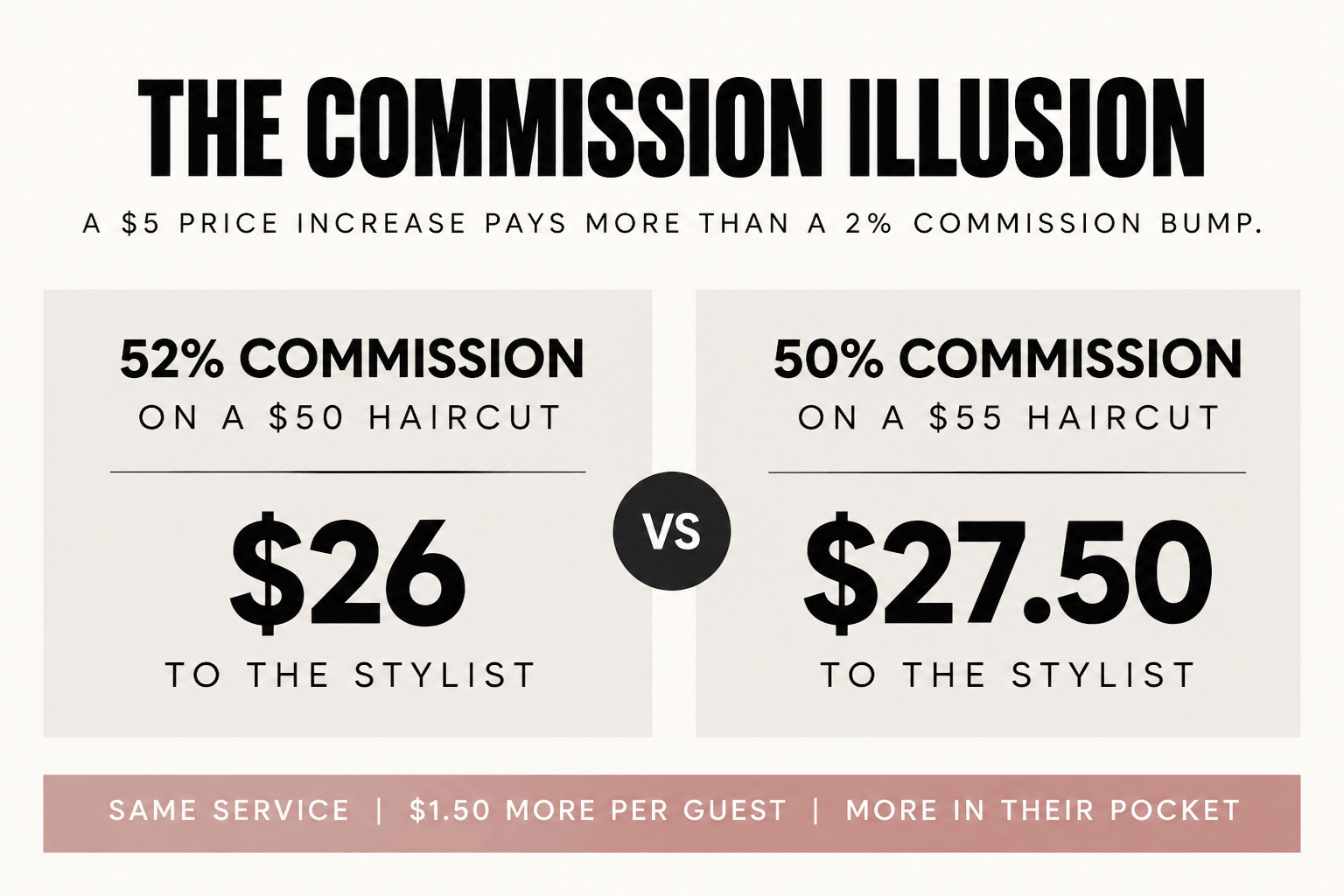
If you’re running a salon right now and you’re bringing in revenue but constantly stressed about money, I want you to know that being busy isn’t the same thing as being profitable.
You can have a fully booked salon, a talented team, and a beautiful space and still have a business that’s financially struggling. And if that’s where you are, the answer isn’t always to work harder or take on more guests. Sometimes the answer is to look at your numbers and be willing to change the structure of your business.
I’m not saying every salon should have the exact same commission structure we use at Urban Betty. Every business is different, and what works for us might not be the right answer for someone else. But I do believe every owner needs to understand what their business can sustainably afford and build their compensation system around real financial information rather than fear or industry assumptions.
And if the changes you need to make are going to upset people, that doesn’t automatically mean you’re making the wrong decision.
Of course, you need to communicate clearly, plan carefully, honor existing compensation agreements, and give your team as much understanding and support as possible. In our case, we preserved existing employees’ compensation and introduced the new system transparently for future hires. That was an important part of how we approached the transition.
But I wouldn’t undo the decision, because I know where Urban Betty was headed if we’d continued doing things the same way.
Looking Back, I’d Make the Same Decision Again
More than 20 years after opening Urban Betty, I can look back and say that implementing the Summit Salon level system in 2014 was one of the most important decisions I’ve ever made as a business owner.
It wasn’t popular with everyone. It wasn’t comfortable. And it definitely wasn’t easy.
But it helped turn a financially struggling salon into a company that could grow, support its employees, and create real career opportunities.
The younger version of me thought being a good boss meant keeping everyone happy. The version of me today understands that being a good leader sometimes means making decisions that people won’t appreciate until much later, if they ever appreciate them at all.
And that’s okay.
Sometimes the decision your staff hates today is the decision that allows you to keep employing people tomorrow.
If I hadn’t been willing to make that change, there might not be an Urban Betty today. There wouldn’t be three locations, the leadership team we’ve built, the education programs we’ve developed, or the career opportunities we’re able to offer.
I had to stop trying to be everyone’s favorite person and start becoming the leader my business actually needed.
And that changed everything.
Let’s Talk About Your Salon
If you’re a salon owner who’s struggling with profitability, commission structures, employee compensation, or making difficult decisions for your business, I’ve been there. I know what it feels like to be bringing in money while wondering how you’re going to pay the bills, and I know how scary it can be to change something your employees are comfortable with.
I’ve spent more than 20 years building Urban Betty, and I’ve learned a lot of lessons the hard way. Now I love sharing those experiences with other salon owners who want to build profitable businesses without sacrificing their culture or the people who make them special.
If you’d like to pick my brain about your business, you can book a one-hour advising call with me. We can talk through what you’re facing, what I’ve learned, and the decisions that helped turn Urban Betty into the company it is today.
Because building a successful salon shouldn’t mean working yourself to death just to keep the doors open.