
Most people think the hardest part of owning a salon is the long hours.
Or the payroll.
Or the scheduling.
Or the difficult guests.
And yes, all of those things can absolutely be hard.
But after owning Urban Betty for over 20 years, I can honestly say the hardest part of owning a salon had nothing to do with business.
The hardest part was realizing that my business success was directly tied to the work I was willing to do on myself.
And I don’t mean reading motivational quotes or listening to podcasts.
I mean real work.
Therapy.
Boundaries.
Self-worth.
Learning to stop enabling people.
Learning to stop abandoning myself.
Learning to stop choosing relationships, friendships, employees, and situations that mirrored chaos.
Because for years, my business mirrored exactly where I was emotionally.
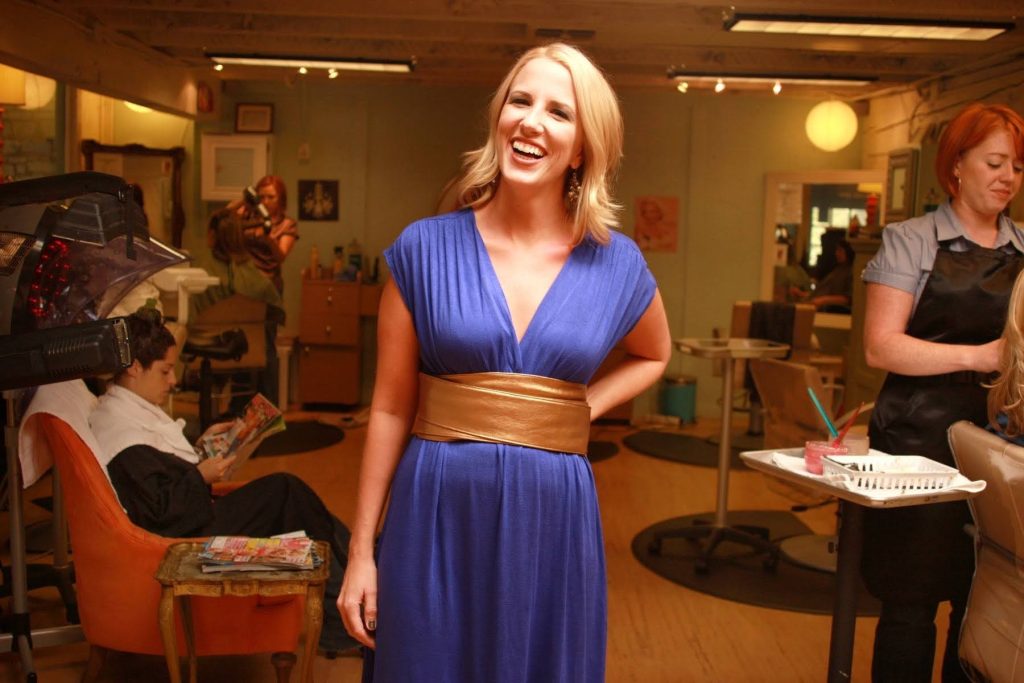
Urban Betty in its Second Year
The Version of Me That Opened Urban Betty
When I first opened Urban Betty, I was married to an alcoholic.
He got drunk every single night.
And while I knew deep down that I had an unsupportive partner, I don’t think I fully understood the weight of it until I opened my salon.
I was trying to build something beautiful while simultaneously living inside emotional chaos.
And eventually, my body started screaming at me.
In 2008, just a few years into opening Urban Betty, I started having dizzy spells and panic attacks constantly. I thought I was just overworked.
And yes, I probably was.
But during my very first therapy session, my therapist asked me one question:
“What’s going on in your life?”
And immediately I knew.
I said out loud for the first time:
“I am unhappy in my marriage.”
That was the moment everything started changing.

My Business Reflected My Self-Worth
When I look back now at the first several years of Urban Betty, it’s almost eerie how closely my business mirrored my personal life.
The first few years, I was in a deeply unhealthy marriage.
Then I went through a divorce.
Then I spent years dating emotionally unavailable people who didn’t treat me well, ghosted me, avoided commitment, or made me feel like I had to walk on eggshells constantly.
And guess what?
My business looked exactly the same.
I underpriced.
I overgave.
I avoided confrontation.
I kept bad employees too long.
I was terrified to upset people.
I allowed chaos.
I let people come and go.
At the time, Urban Betty operated as a booth rental salon, and honestly, part of the reason was because I was scared to actually lead people.
I didn’t want anyone to know I was the owner.
If someone walked into the salon asking for the owner, I would literally tell the front desk:
“Don’t tell them I’m here.”
I hid.
Because stepping into leadership meant stepping into my power, and at that point in my life, I had not fully learned how to do that yet.
I Thought Success Would Heal Me
One of the biggest lies I believed early on was this:
“If I become successful enough, all my anxiety and emotional pain will go away.”
I thought money would fix everything.
I thought business success would finally make me feel secure.
But honestly?
Success amplified everything I hadn’t healed yet.
Because when your business grows, your problems don’t disappear.
They get louder.
If you struggle with boundaries, leadership gets harder.
If you struggle with self-worth, pricing gets harder.
If you struggle with confrontation, managing people gets harder.
If you constantly abandon yourself emotionally, your business starts reflecting that too.
That was one of the hardest lessons I’ve ever had to learn.
Therapy Saved My Life
I say this with zero exaggeration:
Therapy saved my life.
I’ve been going since 2008.
For the first ten years, I went every single week. Now I go every other week, and I still see the same therapist.
I know therapy is expensive.
I know it’s a privilege.
I know not everyone has easy access to it.
But I genuinely do not know where I would be without it.
One of the biggest things therapy helped me understand was this:
I was choosing these patterns.
That realization hit me like a truck.
Because it’s easy to say:
“This person is making me miserable.”
“This employee is ruining my life.”
“This relationship is making me anxious.”
But eventually, my therapist challenged me and asked:
“Why do you keep choosing these people?”
That question changed everything.
I Had to Stop Enabling People
I’m naturally a giver.
And one of the best quotes I’ve ever heard came from a longtime guest in my chair years ago.
He said:
“There are two kinds of people in this world. Takers and givers, you can never outgive a giver, and a taker can never take enough.”
That sentence stayed with me forever.
Because I spent years trying.
I overgave in relationships.
I overgave in friendships.
I overgave with employees.
I overgave in business.
And I had to learn the hard way that no amount of giving will ever fill someone else’s emptiness.
I also had to stop confusing enabling with helping.
That was huge.
Because when you constantly rescue people, avoid accountability, or refuse to set boundaries because you’re afraid people will leave, you’re not actually helping them.
You’re removing their power.
And honestly?
You’re giving yours away too.
Meeting David Changed Everything
In 2012, I met David.
And for the first time in my life, I experienced a relationship that felt emotionally safe.
No games.
No ghosting.
No walking on eggshells.
No confusion.
I finally met someone who emotionally matched me.
Not only emotionally, but successfully.
He supported me more than anyone ever had.
And I want to be clear:
This is not a story about a man saving me.
This is a story about what happened once I finally stopped choosing chaos.
Stability created clarity.
And within two years, everything started shifting.
We brought on Summit Salon Systems.
We changed to a la carte pricing.
We became profitable.
I started surrounding myself with healthier friendships.
I learned boundaries.
I learned leadership.
And the business reflected it all.
Exactly.
The Way I Lead Changed Too
One of the biggest shifts therapy created was in how I lead people.
I used to be terrified of upsetting employees.
Now I understand that leadership is not about making everyone happy.
It’s about creating healthy systems, healthy boundaries, and healthy expectations.
That doesn’t mean becoming cold.
If anything, I think I became more empathetic.
Because now I actually ask questions.
I ask my team:
“What’s working?”
“What’s not working?”
“What could we improve?”
And if something makes sense, we change it.
But I also became strong enough to explain why we do the things we do.
That’s a huge difference.
Old Chelle avoided those conversations completely.
The Micromanaging Warning Sign
One of the most effective self-awareness tools I’ve developed is recognizing when my personal life affects my leadership.
For me, the biggest sign is micromanaging.
When I start overly controlling things, picking apart every detail, or struggling to trust people, I know it usually means I’m not mentally in a good place.
I’ve even joked with my management team about it.
Because awareness changes everything.
Now, instead of spiraling, I can pause, step back, regulate myself, and ask what’s actually going on underneath it.
That level of self-awareness changed the entire culture of our company.
The Biggest Lesson I’ve Learned
The biggest lesson therapy taught me is this:
You cannot control the conditions of another person.
You cannot make someone emotionally mature.
You cannot force someone to support you.
You cannot rescue people from themselves.
And you cannot build a healthy business while constantly abandoning yourself.
At some point, I had to stop seeing myself as a victim.
No one was making me stay in unhealthy situations.
No one was making me tolerate poor behavior.
No one was making me continue choosing people who drained me.
I was choosing it.
And once I finally accepted that, everything changed.
Because the truth is:
Your business can only grow to the level that you’re willing to grow yourself.
And for me?
That had nothing to do with business strategy.
It had everything to do with healing.