
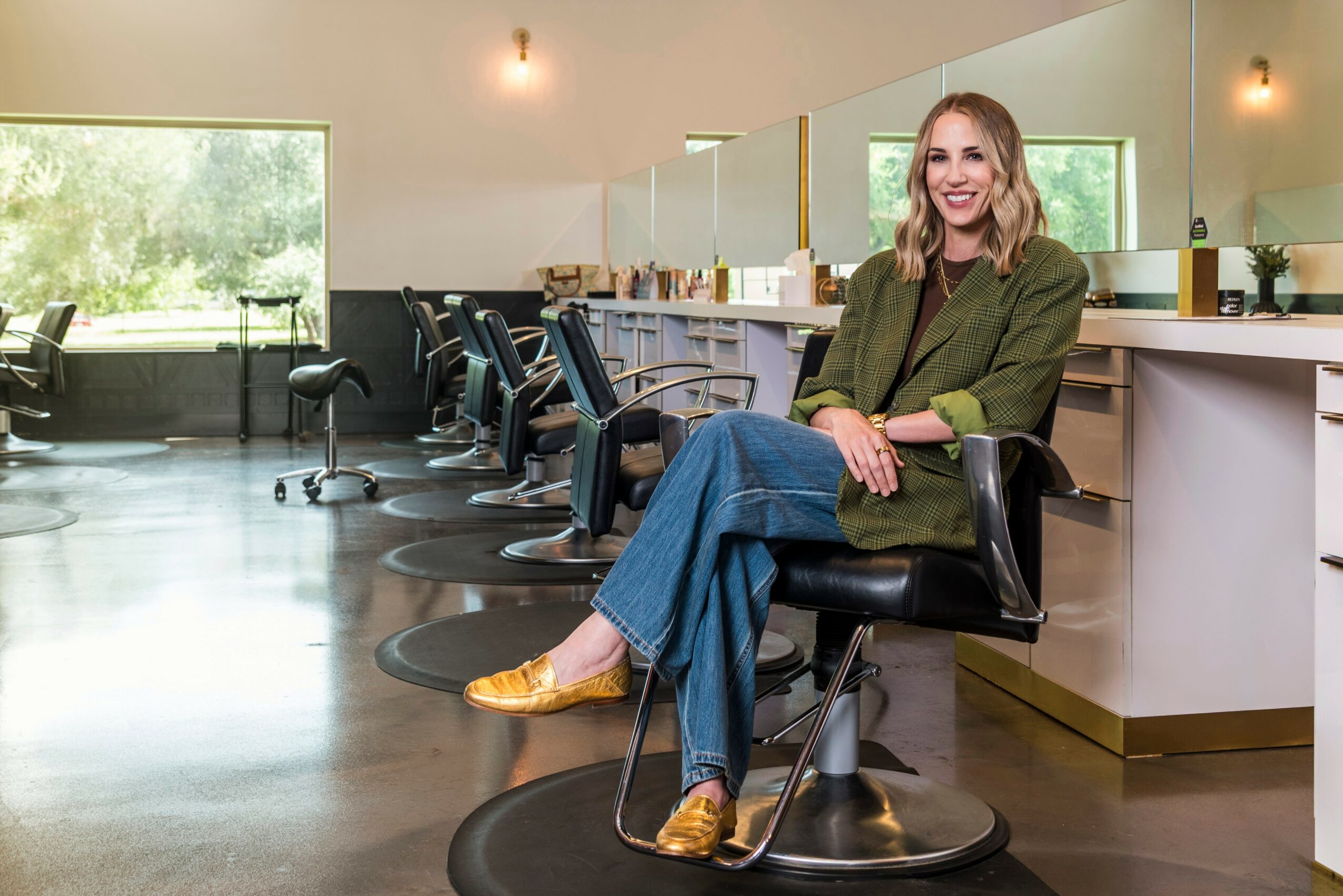
Why Your Salon Is Busy but Still Broke (And How I Finally Fixed It)
I was booked solid, working constantly, and barely making more money than I did when I rented a salon suite.
When I opened Urban Betty in 2005, I had what I thought was a genius business plan. I’d rent out six chairs for $200 a week, let the booth renters cover all my expenses, and I’d do hair in the corner and keep everything I made. Sounds pretty good, right? Except I couldn’t have been more wrong.
I knew how to do hair. I knew how to build relationships with clients. I knew how to fill my books. What I didn’t know was how to run a profitable business. I didn’t know how to create a budget, read a profit and loss statement, or even calculate what it actually cost to keep the salon open. Unfortunately, nobody sat me down and taught me those things.
I Thought My Booth Rent Would Pay All the Bills

Here’s something I didn’t anticipate. Just because you have six chairs doesn’t mean you have six people paying rent. For the first six months, I had ONE booth renter. Eventually, I got two more, but they left because of non-compete issues. It took me almost two years to fill all six chairs. Meanwhile, the bills didn’t care whether my chairs were full or empty. Rent was due. Utilities were due. Insurance was due. And I was still behind the chair, trying to make enough money to cover everything.
I remember looking at my bank account practically every week wondering, “Where the hell is all the money going?” I was busy. My clients were happy. From the outside, I looked like a successful salon owner. But financially? I was barely keeping my head above water.
The $15,000 Mistake That Should Have Been My Wake-Up Call
Things eventually got so tight that I took out a $15,000 line of credit through Wells Fargo. I told myself it was just temporary. I needed a little breathing room until the business got going. Well, I maxed it out. And then came the payments. I was paying around $300 a month, but with the interest, the balance barely moved. It felt like I was making payments on something that would never go away.
Looking back, that should have been a giant red flag. I wasn’t using debt to strategically grow the business. I was using it to survive because my business model wasn’t generating enough money. There’s a BIG difference.
Nobody Tells You How Expensive It Is to Run a Salon
When you’re a stylist dreaming about opening your own salon, you’re probably thinking about the fun stuff. The beautiful stations. The furniture. The lighting. The gorgeous floors. I certainly was. I installed these beautiful light bamboo floors in my first location. They looked amazing until people started doing hair color. Every little color stain showed up, and I quickly realized those floors were going to be a maintenance nightmare. Every three to four months, I had to pay to have them professionally buffed, waxed, and cleaned. That was definitely not in my original budget.
Then there was the time our glass front door broke. No big deal, I thought. I have insurance. Except when I filed the claim, I learned that the front of my building wasn’t covered under my policy. How was I supposed to know I needed separate coverage for that? Nobody had ever explained it to me. So there went another $1,000 out of my pocket. And don’t even get me started on air-conditioning repairs.
Utilities, towels, laundry, cleaning services, toilet paper, paper towels, insurance, plumbing, equipment repairs, software, credit card processing fees, taxes, accounting, marketing, inventory, and backbar products. The list goes on and on. Individually, some of these expenses seem small. Together, they can eat your business alive. And when you don’t have a budget, you don’t even realize how much money is disappearing until it’s gone.
The First Big Shift: From Booth Rental to Commission

Eventually, I realized something else wasn’t working. It wasn’t just the money. It was the culture. I’d walk into my salon and see color stains, messy stations, and people doing whatever they wanted. And the reality was, they weren’t my employees. They were independent business owners renting space from me.
There was nothing inherently wrong with that business model. It just wasn’t what I wanted to build. I wanted a company. I wanted a team that supported each other, shared the same values, and worked toward something bigger. Everything started to change when I hired my first assistant. A year later, she became my first commission stylist. And for the first time, I started to understand what was possible. We eventually moved into a hybrid model before transitioning completely to commission. But here’s where I made my SECOND big financial mistake.
Just Because Your Revenue Goes Up Doesn’t Mean Your Profit Does
When I switched to commission, my revenue started looking a whole lot bigger. But guess what? So did my expenses. Now I wasn’t just providing a chair. I was paying for hair color, products, payroll taxes, supplies, education, and all the other expenses that come with having employees.
And I was paying everyone 50% commission. At the time, I thought that was just what you did. You charge the client, you give the stylist half, and you keep the other half to run your business. Except that other half has to pay for EVERYTHING. And depending on your pricing, product costs, labor expenses, and overhead, there might not be much left over. I had essentially traded one financially challenging business model for another.
Summit Salon Changed Everything in 2014
Nine years after opening Urban Betty, I finally got the business education I’d been missing. In 2014, we became a Summit Salon, and two of the first things I learned completely changed our financial trajectory.
The first was that I wasn’t charging correctly. I was giving away money without even realizing it. For example, when a guest booked a haircut with a hair color service, I discounted the haircut as part of a package. Why? I don’t even know. It’s just what I’d always done. But that haircut still took the same amount of time and required the same expertise. By switching to an à la carte menu, we started charging appropriately for the actual services we performed. Think about how much money you could be leaving on the table if you’re discounting services all day, every day.
The second big change was implementing a commission structure that actually made financial sense. We introduced a six-level system, with commission starting at 40% and increasing up to 52% as stylists advanced. And I want to clarify something important. I did NOT reduce the pay of my existing team. We placed our current stylists at the levels that corresponded to their performance while protecting their existing compensation. New stylists started at Level 1 and had a clear path to grow.
Suddenly, compensation wasn’t just some arbitrary percentage I thought sounded fair. It was connected to performance, revenue, and what the business could sustainably afford. That gave our stylists a real career path while giving the company a financial structure that made sense. It was one of the most important changes I’ve ever made.
The Day I Realized I Didn’t Have to Do Hair Forever
When I opened Urban Betty, I thought I’d always be doing hair. I didn’t even know there was another option. But after implementing the Summit systems, I started to see something I’d never experienced before. The business could actually generate income without every dollar depending on me personally working behind the chair.
I didn’t quit doing hair overnight. I approached it very slowly. First, I went from five days a week to four. Then, about six months later, I went down to three. Eventually, I was only doing hair two days a week. And every single time I reduced my schedule, I checked the budget. Could the company afford to continue paying me the salary I wanted? Was the business producing enough revenue? Were we staying within our financial goals? If the numbers worked, I made the next move.
By 2017, three years after joining Summit, I was finally able to retire from doing hair and focus on running the company. It took me 12 years to get there. And let me tell you, there’s a huge difference between owning a salon that gives you a paycheck and owning a company that can support your life without you physically performing every service.
Today, I Look at My Numbers Every Single Day

Fast forward to today. Urban Betty has grown into a multimillion-dollar salon company with three locations, and the way I manage money looks absolutely nothing like it did in 2005.
Over the last year, I’ve brought on a fractional CFO. One of my favorite things about that relationship is the visibility I now have into our finances. Every single day, I receive a report showing how the company performed the day before. At the end of every week, I receive another report that compares our locations, shows how we’re performing against the previous year, and gives us a clearer picture of profitability. I don’t have to wait until the end of the month to wonder whether we’re making money. We can see what’s happening and make decisions based on actual numbers.
I also learned a tremendous amount about cash management during COVID, when I implemented the Profit First system. We still use that approach today. The point isn’t that you need a fractional CFO tomorrow. The point is that you need to know your numbers, whether you’re running a $250,000 salon or a $7 million company. Because revenue is not profit, and being busy doesn’t automatically mean you’re building wealth.
If Your Salon Is Making $500,000 and You’re Still Broke, Start Here
If I were sitting across from a salon owner who was bringing in $500,000 a year, working 50 hours a week, and barely paying themselves, the first thing I’d want to look at is their commission structure. Because I see this all the time. Owners think that paying 50% commission, or even more, is just the cost of doing business. But have you actually done the math?
Do you know what it costs to have each stylist working in your salon? Are your prices high enough to cover their compensation, payroll taxes, products, overhead, and still leave money for the business? Are you tracking what each stylist produces relative to what they cost? And most importantly, are you including YOUR salary in the budget? You shouldn’t be the last person getting paid just because you own the company.
Now, I’m not saying every salon needs to use my exact commission percentages. Your structure has to make sense for your business, your market, and your costs. But you absolutely need to know whether the numbers work. Because no amount of being busy can fix a business model that loses money on the services it sells.
What I’d Tell the 27-Year-Old Version of Myself
If I could go back and talk to that younger version of myself who was maxing out a $15,000 line of credit and wondering where all her money was going, I’d tell her two things. First, keep going. You’re going to figure this out. But second, STOP trying to figure everything out by yourself.
Find resources. Ask questions. Find other salon owners who are building the kind of business you want to build. Join a mastermind. Get a business coach. Find people who will actually sit down with you, look at your numbers, and help you understand what you’re doing. I wish something like the High Performance Salon Academy had existed for me back then. Having a community of salon owners to learn from could have saved me years of frustration and financial mistakes.
One of the biggest things I’ve learned over the last 20+ years is that you don’t have to know everything to become a successful business owner. But you do have to be willing to learn. And sometimes, the smartest business decision you can make is asking someone for help.
Your salon should be paying you for the business you’re building, not just the hair you’re doing.
Let’s Talk About Your Salon
If you’re reading this thinking, “This is exactly where I am right now,” I’d love to help. I’ve spent over 20 years building Urban Betty, and I’ve made just about every mistake you can imagine along the way.
Whether you’re struggling with your commission structure, trying to understand your profitability, or figuring out how to grow your salon without working behind the chair forever, I’d love to hear what you’re working through. You can book a one-hour call with me, and we can talk through your biggest challenges, your goals, and what might need to change to get you where you want to go.
No gatekeeping. Just real conversations about what I’ve learned building a multimillion-dollar salon company.
Because you deserve to build a business that’s actually profitable. And one that gives you a life outside of the salon, too.